
What Are Host/Hostess Bars?
Japan's nightlife scene explained.


Host and hostess bars are a Japanese cultural phenomenon that most westerners probably haven’t even heard of. They are part of what is known as Mizu-shobai (水商売), this is the term for the night-time entertainment industry in Japan. And to explain it quickly, they are just bars and clubs where either men or women can be entertained by members of the opposite sex while engaging in drinking, chit chat and other activities.
And to clarify, these are not brothels, as sexual acts and touching are not allowed in these places, which are strictly regulated. They are strictly places for intimate, platonic experiences.
What Are They All About?
These bars are a multibillion dollar industry and their primary goal is to make their clients spend money there in return for selling an experience. They do this by encouraging all their clients to buy drinks and to return their clubs—often this results in a lot of clients racking up huge levels of debt. But clients are often willing to endure this because of what they get in return. They get drinks, flirtatious conversation, someone to open up to and generally are flattered and made to enjoy themselves. Often these hosts form bonds with their clients (e.g. they send messages to their clients and whatnot) in order to make them return to their club and spend more—helping them get more commissions and gifts in the process.
In Japan, from what I have seen, unlike in the West there is a lot more acceptance towards the idea of transactional relationships. The people who go to these clubs are desperate for someone to talk to, and to connect with people, even if they know deep down that money is all it comes down to. They understand the game and go to the clubs regardless, in order to unwind and relax.
The work culture in Japan is very demanding, and so companies often try to reward their workers’ efforts with nights out on the company dollar, this also has the added benefit of bonding workers together in celebration. And this boosts morale and improves loyalty.
Top tier clubs are expensive and operate with one-to-one sessions in which individual hosts sell the illusion of intimacy and genuine emotion.
Kyabakura are cabaret clubs, which are cheaper and operate on the same model as the top tier clubs but without the one-to-one sessions.
Are They Good or Bad?
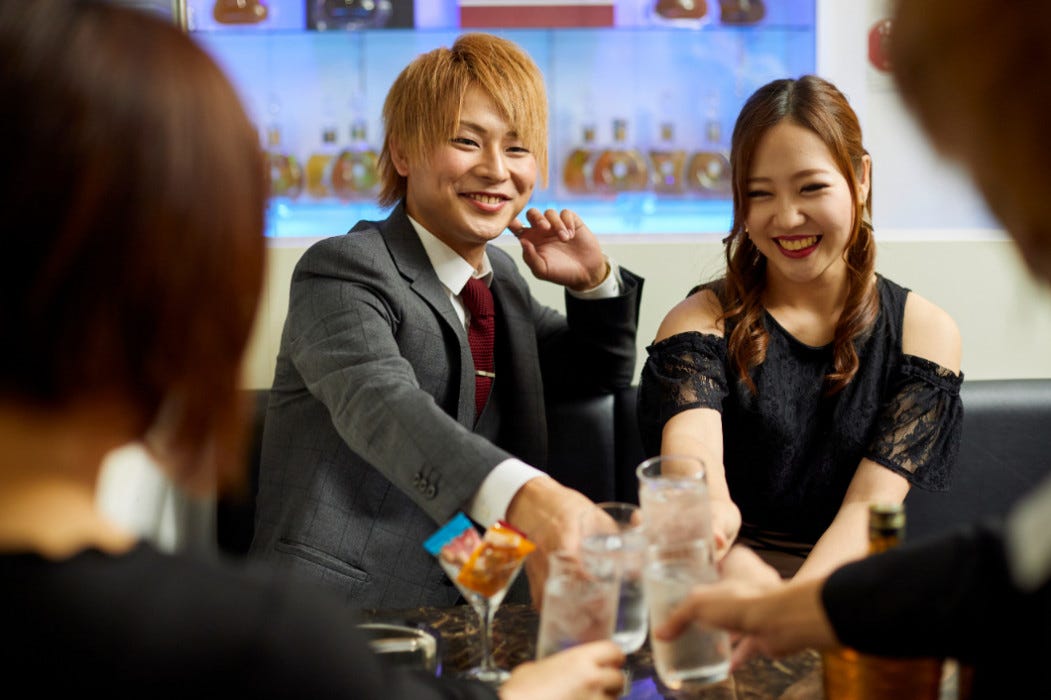
These clubs are completely normal in Japan, but elsewhere the very idea of it would be considered absurd; many may have a hard time understanding the difference between being a prostitute and a host.
I think it is just another strange custom that is rooted in Japan, and has been normalised over time. The idea of being a host or hostess and pretending for your clients seems strange, but it makes sense given the culture of overwork in Japan and the desperate need to let go.
These clubs offer young men and women more freedom than traditional relationships seeing as there are literally no strings attached, just money changing hands, and this makes it an attractive proposition for young people who want on demand platonic intimacy.
But, in my view no matter how normal it may seem, I believe that it is indicative of a larger problem in Japanese society. When the only way for many people to socialise is through hiring hosts and hostesses then it makes you wonder what the future of Japan looks like if its people can’t even talk to each other without a paywall between them.
Not to mention, the atrocities committed within the industry, which are harrowing to say the least. One such example was the murder of Lucie Blackman, who was a hostess in Roppongi, Tokyo, and who was tragically raped and murdered by a client back in 2000 on a date.
Fast forward to now and host clubs are now the epicentre of sex work. You read that right. I said that sexual acts in these clubs weren’t allowed and while that may be true, outside the clubs anything goes. The women who visit host clubs often rack up huge debts, which they are unable to pay and as a result are forced into sex work in order to pay off their debts. This has become a huge crisis in Japan as many women are exploited by these clubs who intentionally make their clients go into debt to force them to work.
Needless to say, host/hostess clubs contribute very little to society apart from the idle chit chat that they offer, which could easily be done for free, and they do a lot of harm as well.
Conclusion
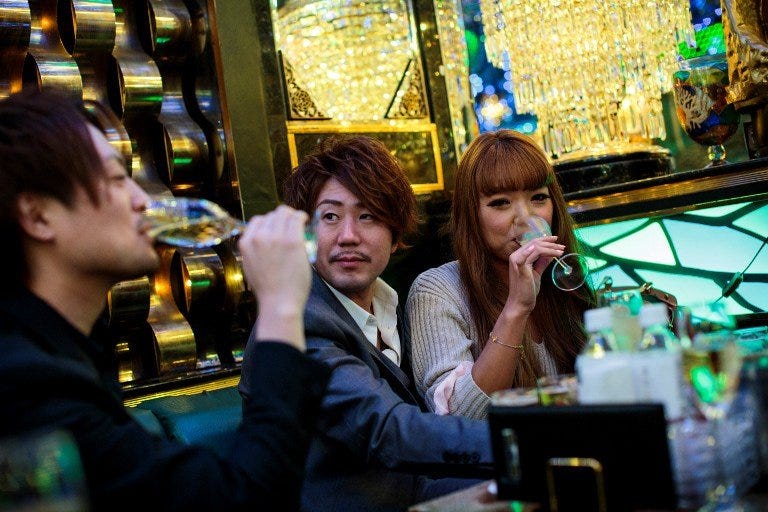
Now, I don’t live in Japan and I’ve certainly never been there, so take my rambling with a pinch of saké but I’ll try my best to articulate my views. Host/hostess clubs have become popular for a reason. That reason is in my view because of societal problems, which have led to the popularisation of a host club career among many women and men, and have resulted in a transactional view towards relationships.
Men and increasingly women are not satisfied with marriage and dating and because of that are turning to new forms of relationships and entertainment.
Although, it could be argued that this new form of transactionalism is merely building off centuries of Japanese tradition. After all, marriage has always been considered transactional throughout history, with dowries, land and money changing hands in the name of marriage. So what makes these clubs any different?
These clubs are symptomatic of the failure of marriage in the eyes of young Japanese people, who feel disillusioned with the old ways of tradition and settling down.
And given that both sexes participate there is a near universal agreement among Japan’s young people that the old ways don’t serve them anymore and so are turning away from tradition and turning towards host bars as a new form of entertainment.
Sources:
2. https://www.economist.com/books-and-arts/2011/02/24/doing-justice
3. https://www.mirror.co.uk/tv/tv-news/harrowing-case-lucie-blackman-who-30560577
I disagree with the end - they're 'the modern counterpart of geishas' as someone on wikipedia put it